
RebillHub: A Payment Engine Built From the Ground Up
A fintech founder was losing revenue to failed payments and manual processes. They needed a system that could route thousands of transactions across multiple gateways, retry intelligently, and show what's happening in real time. Nothing off the shelf fit. So we built it — concept to production in four weeks.
The Founder's Problem
The founder's business processed thousands of payments daily across multiple merchants — each with different gateway credentials, retry rules, and fallback strategies. The process was entirely manual. Upload a spreadsheet. Copy results between dashboards. Hope nothing fails silently. When something went wrong — and it did regularly — the team spent hours reconciling transactions, chasing failed payments, and figuring out what happened. Every failed transaction was lost revenue. Every silent error was a customer who didn't get charged and didn't know why. The founder needed a system that could take a single file, route every payment to the right place, retry intelligently when something fails, fall back to alternative gateways automatically, and show exactly what's happening in real time. Nothing on the market did this. They came to us to build it from scratch.
What We Built
A payment engine that thinks for itself
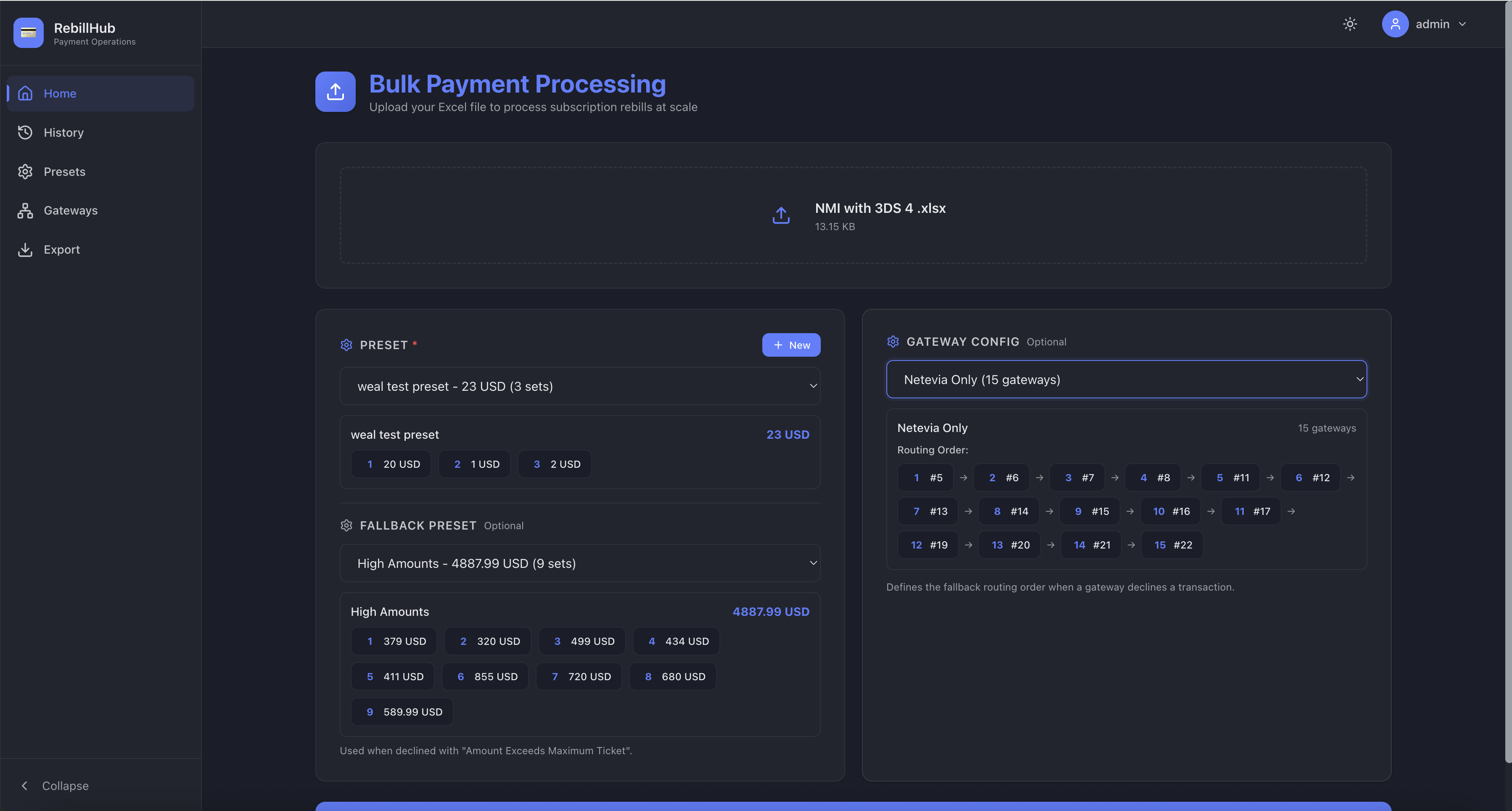
Upload a file with thousands of transactions. The system validates every row, routes each payment to the correct gateway based on the merchant, handles full 3D Secure authentication, and tracks every transaction from start to finish. No manual routing. No switching between dashboards. One upload, thousands of payments processed correctly.
Retry logic that recovers revenue instead of losing it
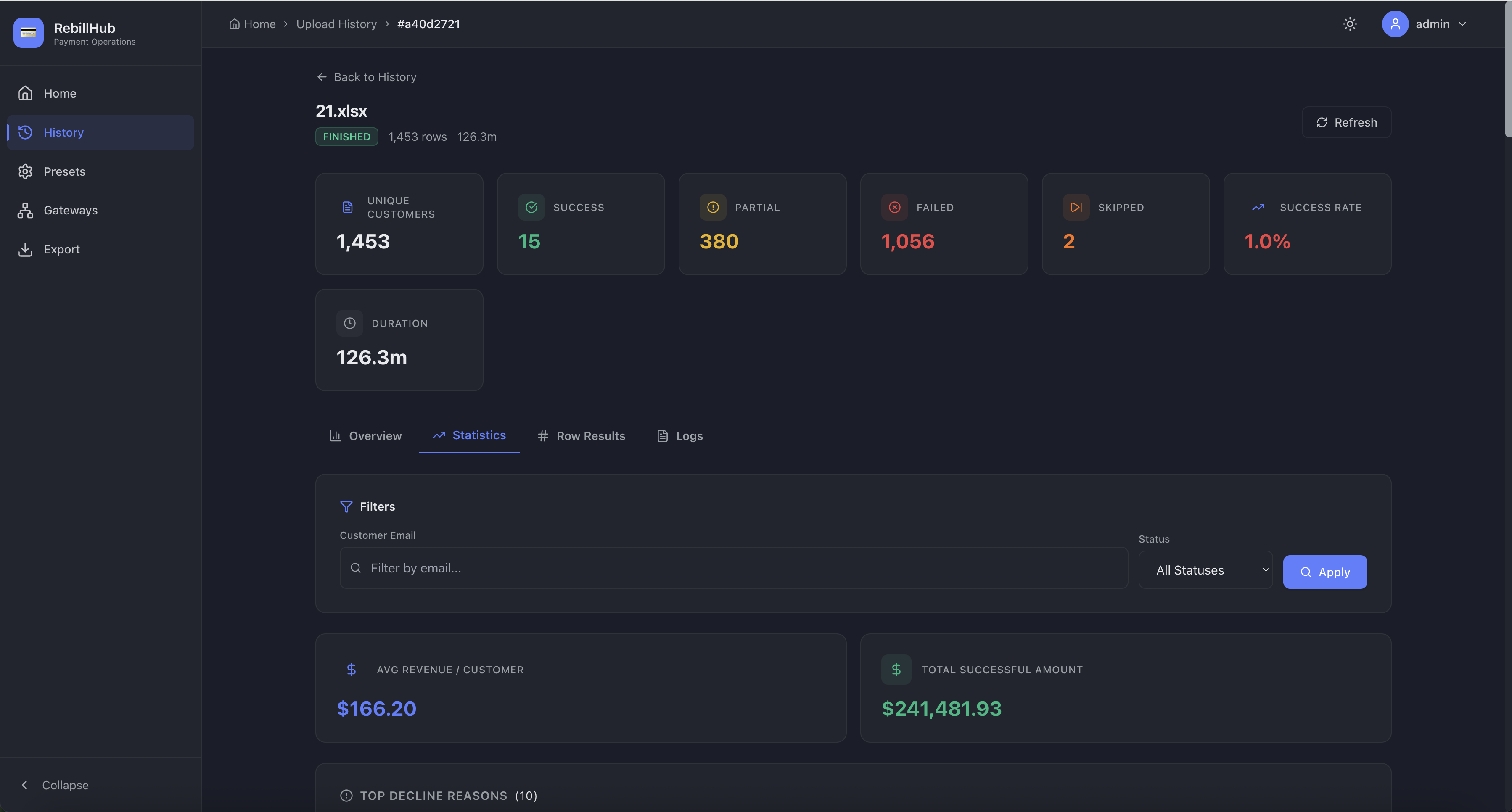
When a payment fails, most systems either retry blindly or give up. We built something smarter. The engine classifies every failure — issuer declined, insufficient funds, gateway issue — and decides what to do next: retry with an adjusted amount, switch to a backup gateway, or skip to avoid hammering a card that's already been declined twice. This alone recovers transactions that every other system would write off as lost.
A live dashboard that shows everything as it happens
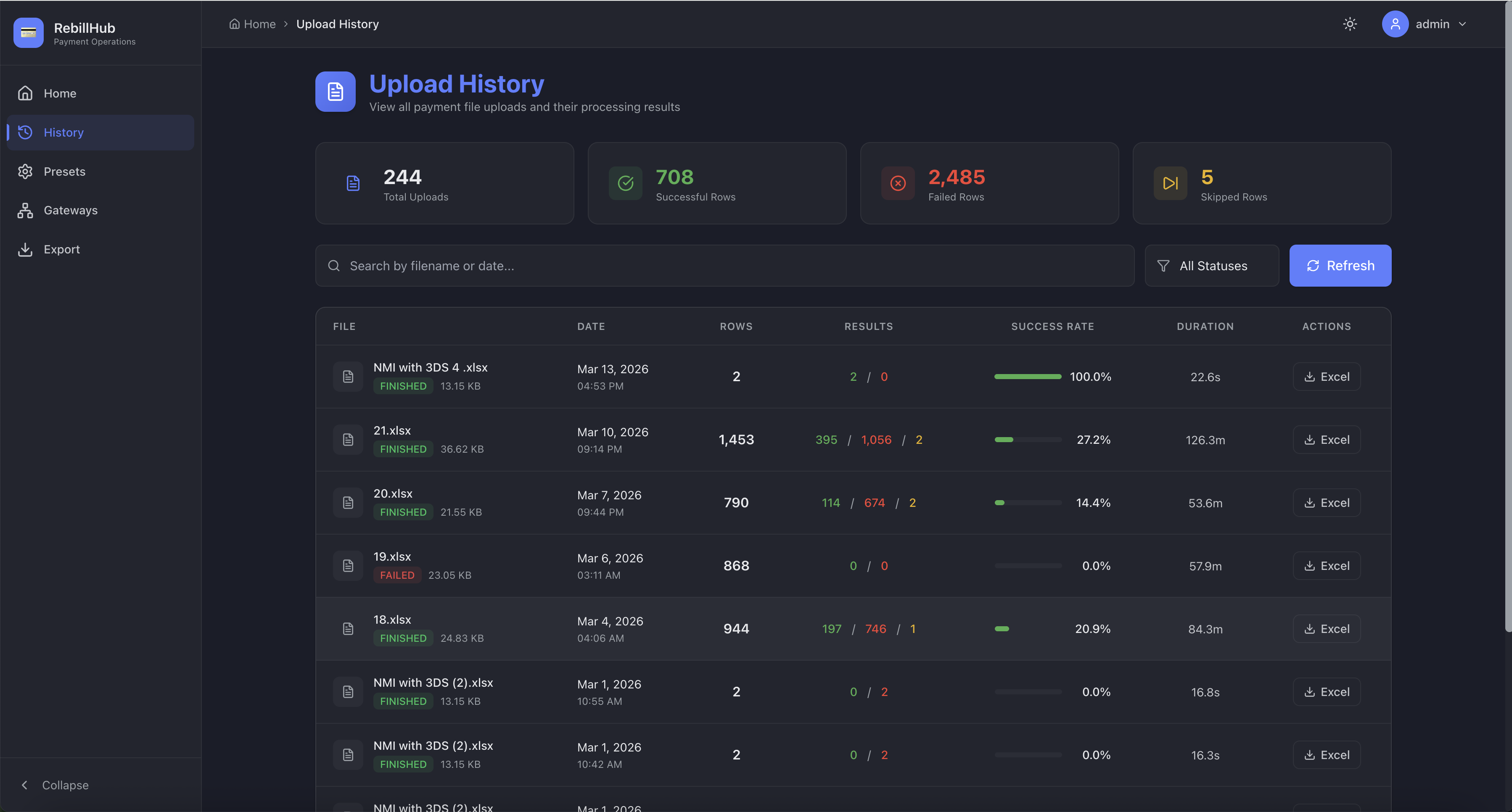
Before this platform, the team uploaded a file and waited. Minutes later they'd get results with no idea what happened in between. We built real-time streaming so operators see every transaction as it processes: approvals in green, declines in red, success rates updating live, per-merchant performance visible at a glance. If something looks wrong, they stop the batch before it finishes — not after.
Configuration that scales in minutes, not days
We built a preset system so the team can define payment configurations and apply them to any upload. Adding a new merchant with their own gateway credentials and rules takes minutes. The platform was designed to grow with the business — not become the next bottleneck.
The Results
Four weeks from first conversation to production. Thousands of payments processing daily with full audit trails. The intelligent retry system recovers failed transactions automatically — what used to require hours of manual reconciliation now happens without human intervention. The real-time dashboard gives operators instant visibility into every batch. New merchants onboard in minutes instead of days. A manual, error-prone spreadsheet workflow became an automated, observable, and resilient payment engine — built to handle scale the founder hasn't reached yet.
Why This Project Matters
This is one of the most technically complex products we've built — and one of the fastest. Payment processing at scale is unforgiving. A dropped transaction is lost revenue. A silent failure means hours of reconciliation. The founder didn't need another payment form. They needed an orchestration layer built by engineers who understood that every transaction is someone's money. We treated it that way.
We Built the Intelligence That Recovers Lost Revenue
See Technical DetailsMost payment systems treat a failed transaction as a dead end. We built an error classification engine that reads every gateway response, categorizes the failure, and executes the right next step automatically. Retry with a reduced amount. Switch to a backup gateway. Or skip entirely to protect the card from being flagged. The founder told us the retry logic alone justified the entire engagement — it recovers revenue that was previously written off as lost.
From Spreadsheets to Real-Time Observability
The shift wasn't just technical — it was operational. Before: upload a file, wait, download results, manually check for errors. After: upload a file and watch every transaction process live. Green for approved. Red for declined. Yellow for retrying. Success rates, throughput, and merchant performance updating in real time. The team went from spending hours on reconciliation to spending minutes confirming everything worked. That's the difference between a tool that processes payments and a system that runs a business.
Other Projects
 SaaS
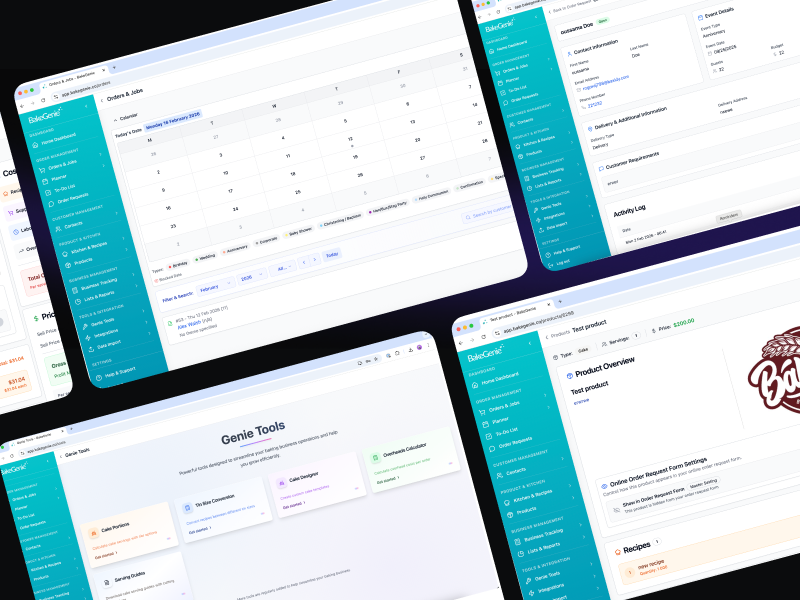
SaaSBake Genie: From Broken to 600 Paying Members
A founder came to us with an AI-built SaaS that was falling apart. Users were waiting to pay — but the product couldn't handle them. We rescued it and launched in two weeks. 600 users came on in the first week. Six months later: 600 paying members and a platform built to scale.
 SaaS
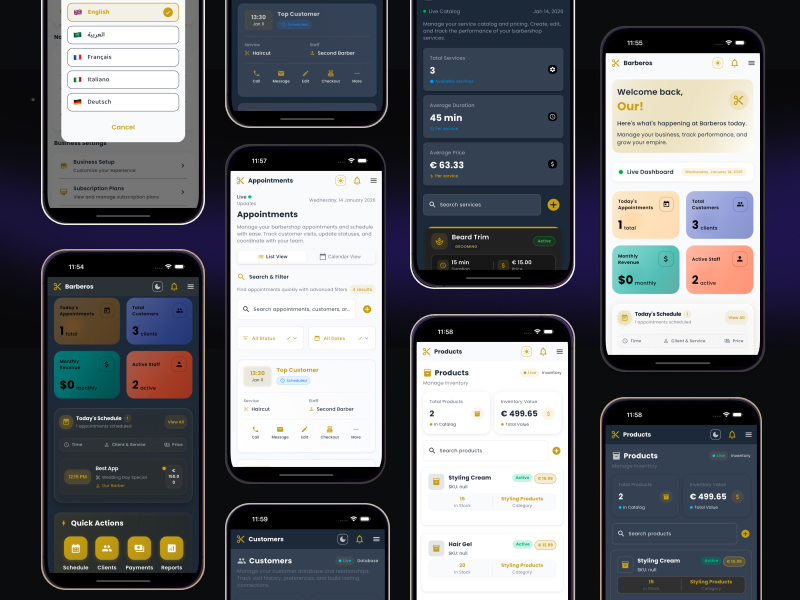
SaaSBarberos: Built From Zero to a Growing SaaS
A founder came to us with a gap in the market: small barbershops were stuck between WhatsApp chaos and overpriced salon software. We built the product, shaped the strategy, and helped launch it — from first line of code to first paying customers.
 SaaS
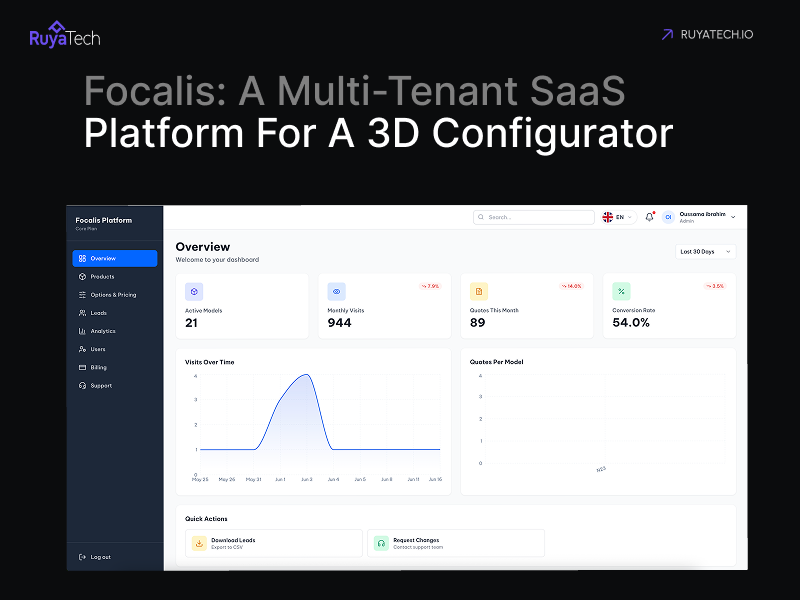
SaaSFocalis: A Multi-Tenant SaaS Platform for a 3D Configurator
A client owned a powerful real-time 3D product configurator but no way to sell it as software. We built the multi-tenant SaaS platform around it — admin portal, backend, and billing — so they can onboard and run fully isolated customers themselves, with no code changes and no vendor dependency. Delivered in about six weeks.

Ready to Build, Rescue, or Scale Your Product?
Tell us about your project. If it's a good fit, we'll schedule a strategy session.
Let's TalkWe respond within 4 hours during business hours. No obligation.
Questions About Our Work
Common questions from founders exploring our portfolio and considering working with our team.